Alice’s Adventures in Wonderland by Lewis Carroll

D7DD87BE-00B8-46A5-A858-514A185F95C2_4_5005_c

I’ve been reading Alice’s Adventures in Wonderland again – many decades after my first read – as I’d booked to see the Alice: Curiouser and Curiouser exhibition at the Victoria & Albert Museum. I’m slightly ashamed to say I don’t remember ever reading the book to my own children, but I do remember it was one of my favourites as a child – a book (along with Alice Through the Looking Glass) that I read over and over again.

As I started this ‘adult’ read – reading it as an adult – it struck me how weird it all was. Of course, I knew that, but I’d forgotten quite how weird and upside down a world is created here. When I was only about halfway through and happened to be talking to my daughter, I discussed with her that it was interesting to think how I’d seen it as a child. Did it all seem as weird and extraordinary to the young me as it did to the adult me? Or did I take it more at face value? Accepting the extraordinary more readily. Children are very accepting of magic. As I watch my young grandsons immersed in imaginary games, I’m not sure they would be at all surprised if a white rabbit ran past them saying, ‘Oh dear! Oh dear! I shall be too late!’

You can find many analyses and interpretations of Alice online, and it invites all kinds of theories, but of course none of these would mean anything to a young child. I’m guessing I was about eight when first enraptured with Alice. I was an early and voracious reader and Alice was only one of my literary loves, but certainly one I turned to regularly. What did I see in Alice then? What so captured my imagination and interest? Perhaps it was no more than a child’s love of magic.

What I did see in Alice when reading it again now is the way Carroll captures the essence of children. Children are very logical and so is Alice: of the Queen of Hearts’ rule about processions, she says, ‘… what would be the use of a procession … if people had all to lie down on their faces, so that they couldn’t see it?’ Alice also displays a child’s sense of fairness and embodies their tremendous intensity and exaggeration. The Queen of Hearts screaming ‘Off with their heads!’ is just the kind of thing a child would scream in a boisterous game. Children live on a big scale, a small disruption to their lives or desires often blown out of all proportion to the adult. And of course there’s impassioned talks and questions. Anyone who has experienced a small child’s ‘why’ questions, the endless wanting to know more and more, no answer ever being enough, will recognise these qualities in Alice, who is constantly interrupting to question everything.

What the V&A’s exhibition confirms is that really, there is no definitive meaning to be gained from Alice. But its exploration of the way the books have influenced most areas of our lives since they were published 150 years ago, is both hugely informative and delightfully entertaining. And we learn much of Carroll (really Charles Dodgson, a Cambridge don) whose obsession with riddles and mathematics began at a precociously young age, as witnessed by a school report. We also learn – or are reminded – that at the time Carroll was writing a standardised Greenwich Mean Time had not been introduced (it came in 1880 and the first Alice was published in 1865) and thus the discussions of time at the Mad Hatter’s Tea Party, the rabbit’s distress about being late as he looks at his pocket watch, all make more sense when we understand that time was moveable and not agreed upon.

The Tea Party is a reflection of the new idea of ‘taking afternoon tea’, introduced by the Duchess of Bedford in the 1830s. The exhibition tells us that Carroll’s Mad Hatter party was ‘parodying these stuffy social conventions’. Thus Carroll makes social and political statements through the vehicle of Alice. But there are less tangible, more abstract questions. Much has been written about Alice and identity. The exhibition notes tell us: ‘Alice changes in shape and size, and repeatedly faces the question “Who are you?”‘ We can see Alice as a young girl trying to make sense of an adult world; a young girl struggling with the changes to her body as she grows. But Alice is also an example of female empowerment for she grows in confidence as the story unfolds.

There’s so much more to Alice than I’d remembered and I’m so pleased I reread the book and the V&A’s exhibition is glorious. If you’re in London, don’t miss it! Click here for their website.

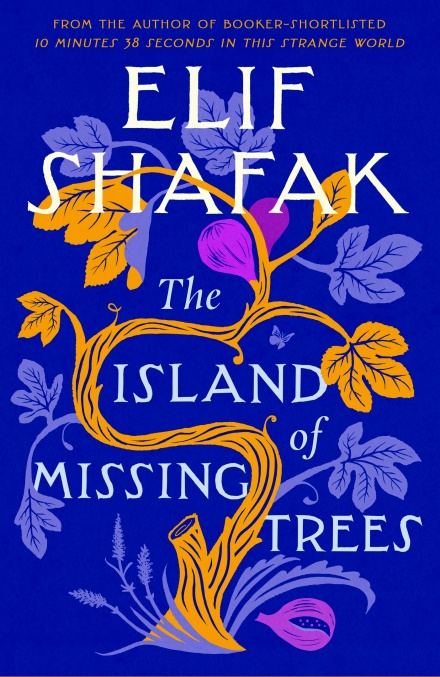
The Island of Missing Trees by Elif Shafak

07887F28-ED8F-4FCD-ACA3-D5CBA4BF013C

This was a bit of a spontaneous buy – reading just a few words about it in an email about new books made me think it would be one I’d enjoy. It turned out to be a book I loved. An extraordinary book that’s sad, inspiring, magical and wise. It’s about enduring love; what it means to be an immigrant, someone not living in the country in which you were born; it’s about family history and the passing on or denial of the past.

Elik Shafak is a British-Turkish prize-winning author. The Island of Missing Trees centres around the story of Cyprus and its divisions after the Turkish invasion of 1974, which led to the island being divided into Turkish Cyprus to the north and Greek Cyprus to the south. Before this, the tensions between the Turks and the Greeks was already difficult enough that two young lovers – the Turkish-Muslim Defne and the Greek-Christian Kostas – had to keep their love secret from their families who, if they knew, would disown them.

‘Once upon a memory’ opens the book, ‘lay an island so beautiful … that many travellers … fell in love with it … wanted never to leave or tried to tow it with hemp ropes all the way back to their own countries.’ Such beautiful language makes the tragedy of the battles and divisions that have raged throughout Cyprus for generations all the more vivid and haunting.

The story, however, opens in London with Ada, 16-year-old daughter of Defne and Kostas, who when asked by her teacher about family heirlooms can’t answer, and then starts screaming. Is she screaming because her mother recently died? Is she screaming because her father has been consumed by his grief and become distant from her? Or is she screaming because of all the untold stories, secrets, ghosts and tragedies of generations that lay hidden within her?

The Island of Missing Trees follows Defne and Kostas’ story through Ada, a girl born in London with all traces of her Cypriot heritage apparently wiped away but desperate to be recognised. Much of the story is told through a fig tree (which narrates alternate chapters), grown from a cutting of a tree that stood in the middle of The Happy Fig taverna in Nicosia. A tree that has witnessed all. In 1974 the taverna was run by a gay couple – one Greek Cypriot, one Turkish Cypriot – who were more at risk of discovery than even the young lovers. It was a happy place ‘despite the tensions and troubles besetting the island … It was a place with history and small miracles of its own.’ Yusef and Yiorgos help the young lovers, giving them a quiet corner of the taverna where they won’t be seen. The men are their protectors – but there’s no one to protect them when violence breaks out …

Kostas is persuaded to go to London in 1974 to escape the danger in Cyprus, told it’s only temporary, but  really for good. He writes to Defne but she doesn’t write back. More than 20 years pass but Kostas can’t forget his first and true love. By now he’s become a well-respected botanist and when his work takes him to Cyprus again, he knows he has to find out what happened to Defne. She is working as an archaeologist digging up the remains of all those who died in the war so that the lost are identified, the families can make peace. Or do they make peace? Should some things be left alone?

Despite Defne’s initial reluctance the two become a couple again … secrets, heartbreaks are shared. Both move to London, Defne already pregnant with Ada. It should be ‘happy ever after’ but in real life this rarely happens, and nor does it here. Defne becomes an alcoholic, she can’t forget the past and is haunted by ghosts and the loss of her own country, by the family who rejected her. She and Kostas agree to never speak of the past, of their families, so Ada grows up in ignorance of her heritage, her culture, her wider family. A decision made with love but also ignorance of our need to know where we came from, who we are.

Meanwhile, through the fig tree, the family’s story is told through a weaving of nature: of trees and plants, or animals and insects. It’s a wondrous tale of the continuity and connections in life.

I really loved this book: a book which is sad and troubling but also one of hope and delight.

Grandmothers by Salley Vickers

IMG_7241

I’ve long been a fan of Salley Vickers – since a friend lent me her copy of Miss Garnet’s Angel (probably Vickers’ most popular and well-known book) as I was heading off on a holiday to Venice in 2006. I loved the book so much I had to buy my own copy and then lent it to others who were visiting Venice. I also very much liked The Other Side of You, but on the whole, the more recent books haven’t made quite the same impact on me as the early ones, although I’ve enjoyed them.

A friend mentioned Grandmothers to me a few months ago. As doting grandmothers she thought we should read it. I waited a while to see when the paperback would come out (I rarely buy hardbacks and don’t like reading novels on Kindle), but as it won’t be until September 2020, I gave in and bought the hardback. I knew the book had received mixed reviews so approached it with some uncertainty about what I’d think.

One of the things that appeals to me about Vickers’ writing is her background as a Jungian analyst. This might suggest that her writing is heavy going but in fact her books are easy reading, in the sense that they flow and are very accessible. What her psychotherapist background gives her is a deep understanding of how people think, how they react to events and situations; how their experiences in life have led them to be the people they are now; how relationships work – or don’t work. Thus there are always moments of recognition; moments when you know she’s caught exactly how someone would feel. This is usually just one sentence that is so well put together that it stops you fleetingly and you think ‘oh yes’ or ‘but of course’.

There are similar moments in Grandmothers, though not really startling or new thoughts that you’ll take away with you as precious revelations on the workings of life. Vickers knows that ‘Children understand better than people give them credit for’, that one of the hardest things to grasp is ‘that other people see life from a perspective often quite unlike one’s own’ and that ‘the whole business of meting out blame was a mistake. Blame was a displacement activity, a means of avoiding the recognition that very little in life was in your control.’ She asks whether it is ‘sadness that made people kind – or was it that kind people were more liable to sadness?’ But these are more neat little summings up of what we already know rather than words that make us think deeply.

There are three grandmothers in the book and rather an odd bunch they are. They are not particularly likeable; one, Nan, is particularly difficult and fierce. Their overriding feeling is that they know better than the parents of their grandchildren, but the wisdom of their long lives and experience is not appreciated. They come from dysfunctional backgrounds, carrying long held griefs (that one feels a bit of psychotherapy should have sorted out years ago) and their young families are equally dysfunctional. This all gives a sense of the characters being formulaic, mere vehicles for some of Vickers’ ideas, and thus a little too one dimensional.

So … I quite enjoyed the read; it was an easy read and engaged my interest enough to want to read on (and I do give up on books I’m not enjoying!), but it was a disappointment; it didn’t feel like a book that came from the heart. And as a book about grandmothers, it should have had a lot of heart.


Laurie Lee: A Rose for Winter

IMG_0042

I’ve recently been to Malaga and when I’m away, I like to take along a novel or travel book set wherever I’m heading. I actually bought Laurie Lee’s A Rose for Winter last year to take to Granada, and indeed read that chapter while there. Planning my reading for Malaga, I couldn’t find anything actually set in the city, but as Lee’s book is about Andalucia then I thought I should give it another airing and read more. In the end, I became captivated by his writing and read the whole thing (not actually very long at 112 pages), including the ‘Granada’ chapter again.

Lee (aged 37) and his wife Kati set off to Andalucia in the winter of 1951 and travelled around the area for 4 months. Lee had been there 15 years before, just before the outbreak of the Spanish Civil War in 1936. Thus the ‘new’ journey with Kati revisits some of the ‘old’ places and people from the earlier trip. He was a successful poet by now and making some money from it, but they still had to travel on a budget and walked most of the way, stayed in cheap hotels or lodgings, and Laurie made some extra money from busking with his violin. He was working on Cider with Rosie, his most famous and successful book, but it wasn’t published until 1959.

I think it is because Lee is a poet that his writing is so poetically wonderful. Laurie and Katie visit five places in the book, including Seville and Granada. It’s not a travel book in the sense of being a guide or giving historical background and discussing the major sights. Lee doesn’t even discuss the politics of the day much (and this is the age of Franco). It’s about a personal journey and the book shimmers with radiant life and truly transports you to Andalucia and gives you an insight into the land and its people. It opens: ‘A brilliant November morning with a sky of diamond blue above the bay and the red flowers of a long summer still glowing darkly on the rock‘ and the country they had come to seek ‘crouched before us in a great ring of lion-coloured mountains, raw, sleeping and savage.’

Lee writes of Granada that it is ‘perhaps the most beautiful and haunting of all Spanish cities; an African paradise set under the Sierras like a rose preserved in snow.’ Of Seville he writes: ‘Seville of sweet wines and bitter oranges … the city where, more than in any other, one may bite on the air and taste the multitudinous flavours of Spain … acid, sugary, intoxicating, sickening, but flavours which, above all in a synthetic world, are real as nowhere else.

Allowances have to be made for the book’s age and sometimes it seems dated. It has also been criticised for employing some ‘poetic’ licence, yet don’t the best travel books do this? If you want pure facts, read the guide book or history book; A Rose for Winter is about the experience and feeling of being in southern Spain in the 1950s and even in the 21st century it provides a wonderful backdrop to any visit to Andalucia and Lee’s writing is pure literary joy.

David Michie: The Dalai Lama’s Cat

1D0AD718-9D15-41E0-AE6B-6565B4626F27

It may be some time since I wrote here about what books I’ve been reading but I can assure you the reading has been happening. It’s just a question of some being for work, some being for my book group (that has its own blog) and some I just didn’t feel inspired enough to write about and recommend.

The Dalai Lama’s Cat was irresistible to me. I first spied it on my daughter’s book shelves but decided to buy my own copy rather than borrow hers. I’m pleased I did because it’s a book that deserves more than one reading but also I’ve always had a weakness for wanting to have my own copy of books I enjoy a lot. I remember discussing this over lunch with another book editor once. We’d both bought books we’d borrowed from others and loved, just to have our own copies!

This book was irresistible because 1, it was about cats, and I’m a devoted cat lover (as my own cat Bella would attest to if asked, I’m quite certain), and 2, I’ve had a long interest in Buddhism and have also taught mindfulness meditation (part of some alternative health work I do).  The Dalai Lama’s Cat is categorised as a ‘novel’ by its publishers, but being Hay House, which was founded by the late and wonderful Louise Hay, then it was bound to have a spiritual element to it.

It really is a delightful book. It’s deceptively light in reading but full of wisdom and humour. There are wonderful, vivid descriptions of life within the Dalai Lama’s home, the Namgyal Monastery in Mcleod Ganj, India, and a host of colourful characters who are part of his – and later the kitten’s – life.  When the Dalai Lama notices a stray and injured kitten on the streets of New Dehli, he gets his driver to stop and the little kitten is carefully taken back to the monastery. Here, in a home filled with love and the privilege of being able to sleep at the bottom of the Dalai Lama’s bed and sit during the day in his office, HHC (His Holiness’s Cat, a.k.a Snow Lion) learns many of life’s lessons according to the Buddhist way of thinking. For anyone who wants to know more about Buddhist teachings this is a wonderfully accessible way to learn more and it’s a story told with love and happiness. I enjoyed it so much I’ve ordered the next 2 books in the trilogy: The Art of Purring and The Power of Meow. How could any cat lover resist!!