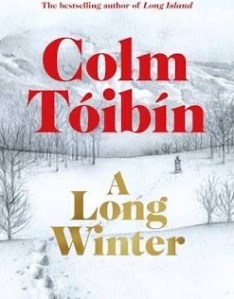
This tiny book – I won’t call it a ‘novella’ as Tóibín is rather dismissive of that label (‘a novella is something no one wants’), though I’d have to disagree as novellas, like short stories, can be wonderful things – was a present from my friend Tina. I took it with me when I went out for coffee and some shopping yesterday morning. Normally on Sunday I like to have a coffee and then go for a walk round Richmond Green, maybe to the river, before the shops open (late on Sundays). But the rain, which has fallen relentlessly here in London for days, put paid to that routine and so I took my new book and decided I’d just take more time over coffee and have a good read. Good read! By the time I’d reached the end of the longish first chapter, I felt this wasn’t just a ‘good read’, it was a perfect read, a completely magical gem.
In a long Afterward at the end of the book, Tóibín tells us the story was originally published in 2005 at the end of his book Mothers and Sons and then as a separate book in 2025. He also describes how the story came to be written, based on his experience in Catalonia in the winter and a true story he heard there when trying to buy some land. I worked in longhand every day … the very weather of the story was happening outside my window. It may be a very short book but this Afterward is a fascinating insight into the time, thought and experience that Tóibín put into writing it.
The story is set in the high mountains of the Pyrenees one winter. Miguel’s family are preparing for the departure of his younger brother Jordi to go off for his two years’ national service. Miguel had managed to laugh to please his father, a role normally played by Jordi … but Jordi seldom spoke now. The family go into town to the market and while Jordi is taken for his military haircut by his father, Miquel goes to buy provisions with his mother. It is when she goes off on her own and he then tries to find her, he discovers her secret … she is in a bar downing tumblers of wine … his mother is an alcoholic.
Back home, he becomes aware of the signs he’s missed, realises this happened when he was away on national service but no one told him: In keeping the secret, they had treated him like a stranger. We learn of the hostility to the family since his father denounced some local families who diverted water in the summer months, effectively stealing from others, and while the rest of the village spoke in their defence, Miquel’s father took them to court where they were fined. This sense of isolation, of tension and things unsaid, grows as Jordi prepares to leave and is then gone. Miquel is troubled by the empty twin bed close to his; his brother’s absence.
When the father intercepts a delivery of wine his wife has secretly ordered and throws it all away, she becomes silently distraught, sitting hugging herself and rocking. Miguel’s father is determined she’ll just have to get used to it; there is no understanding, no compassion. Miguel tries to persuade him to buy her a little more but no. That’s not going to happen. Then … the mother disappears. While Miguel and his father are working repairing a barn one day, she puts on a coat and walks away and disappears. Heavy snow falls just as she goes. A few neighbours saw her walking away, it’s suspected she may be heading for her brother’s in another village. But the weather is turning too bad for her to get far …
Over the winter, cruel months of deep snow when travel is impossible, Miguel and his father must come to terms with the mother’s disappearance. Can they dare to hope she might have made it to her brother’s? Should they let Jordi know? Miguel is forced to take over the running of the house, look after the chickens, but he has no idea how to do it all and his father just complains at his attempts. When Miguel thought about his mother the feelings were sharpened by guilt … He knew that if he’d been brave he could have prevented her from leaving. He should have been braver in confronting his father.
Then his father comes back one day with Manolo. An orphan who is being given a home in return for him running the house. Manolo turns out to be great at it: he’s a good cook, the chickens start laying eggs again. He says little until one day, when Miguel’s father is taunting him yet again for his ‘womanly’ skills and says he should wear a skirt, Manolo turns on him and quietly threatens to leave if he says this again. Miguel, at first put out by Manolo’s presence, his use of Jordi’s bed, comes to form a warm and close bond with him. And there is a hint of love …
The story ends with the arrival of spring. It heralds change. Will Miguel’s mother’s body be found? Is it time for Miguel to allow grief, accept the loss? He watches his father shoot a bird, The dying bird was beyond human in its grief … Manolo held him hard, and in this moment of horror and grief there is hope for the future.
This is a truly beautiful read. Tóibìn’s elegant writing is a joy in itself, but this is a story that, despite its brevity, is full of strong emotion and powerful characters.
 Kay Gale Editorial Services